


WHISTLER THE AMERICAN?
DANIEL E. SUTHERLAND - LETTERS FROM AMERICA

A few “Letters” ago, I mentioned a poem by Ezra Pound, “To Whistler, American,” written in 1920, that celebrates Whistler’s American birth and claims him as a national hero. There is no doubt that Whistler was born in the United States. Even he, except for the Ruskin trial, when he swore to have been born in St. Petersburg, Russia, never denied that fact. For him, it was merely a question of where in the United States he had been born, and that was a moveable feast. But does nativity alone determine a person’s nationality? Whistler did, after all, spend all but sixteen of his sixty-nine years outside the United States, mostly in England. Yet, while also buried in England, the semi-nomadic Whistler roamed the globe from an early age. Were it not for his wife’s ill health, he may well have spent his final years in France.
What could have marked Whistler as exclusively American? Probably not his voice or accent, which he altered to suit an audience and circumstances. He could speak with purposeful affectation, too. A friend described his “strange accent” as “part American, part deliberately French.” Then again, he might employ an exaggerated upper-class English accent when dealing with people he wished either to impress or bewilder. “I’m chawmed to meet you,” he would say, followed by, “Deah old Pendleton, how is he? Fine old chap,” with the ensuing conversation punctuated by “Beg pahdon?” and “Reahly!” An American art critic who called Whistler the “Head of the Impressionists” (suggesting a French connection?) thought his otherwise “American voice very slightly overlaid by an English hesitancy of speech.” He concluded, “It would be hard to say to what nationality he belongs.”
Then again, while Americans thought he sounded “very English,” Britons and Europeans said he retained the flat nasal “twang of the northeastern United States. An American art magazine claimed that the “strong nasal accent” marked him as “an out-and-out Yankee, if ever there was one.” Others detected the languid syncopations of the American South. More particularly, one person heard “a drawl as sesquipedalian as that of Mark Twain.”

However, to be associated with an American accent (however defined), was not necessarily a good thing. People who thought him quarrelsome, dismissed Whistler by saying he had “a tongue like a whiplash, and very American.” A fellow countryman who thought his “taste in matters of art infallible and exquisite,” was embarrassed to acknowledge “a touch in him of the loud, bar-frequenting American.” Perhaps this is what another fellow meant when he described Whistler’s voice as “strident.”
Language aside, Otto Bacher, one of his American followers, noted Whistler’s “French habit” of enjoying a glass of absinthe before dinner. Perhaps that was one reason French writer, critic, and collector Theodore Duret, a close friend for nearly thirty years, declared Whistler an “en-Frenchised” American. The Times said much the same thing in its obituary for Whistler (hoping to disown him?) by describing him as “American by birth and French by his artistic education and his sympathies, and French-American he remained to the end, notwithstanding his long residence in London.” A fellow American, equally puzzled, noted that Whistler “gesticulated more than any Briton, but his gesticulations were not Parisian, they were Whistlerian.” Further complicating matters, American collector Louisine Waldron Havemeyer concluded, “He was a firm and solid graft upon English soil. As an artist he hailed from no man’s land, but tastes and habits made an Englishman of him.”
Still, that American birth loomed in the background. “If Whistler’s Americanism sat lightly on him at times he was, nevertheless, an American,” judged American journalist and friend George W. Smalley. “He could not have shaken off his nationality if he would; nor did he wish to.” True enough, unlike his friend Henry James, Whistler never relinquished U.S. citizenship. He also clung to certain aspects of American culture. He loved the humour of Mark Twain and Bret Hart and could quote Abraham Lincoln at will. His fondness for buckwheat pancakes and American “cocktails” was well known. He introduced Auguste Rodin to American ragtime from recordings on an early gramophone. He relished a performance of Buffalo Bill’s Wild West Show, accompanied by his son Charlie and future stepson Teddy Godwin, when it performed at Earl’s Court in 1887. In May 1899, he once confessed, “I am really a d__d bluffer when I pretend that I am not proud of being an American.”
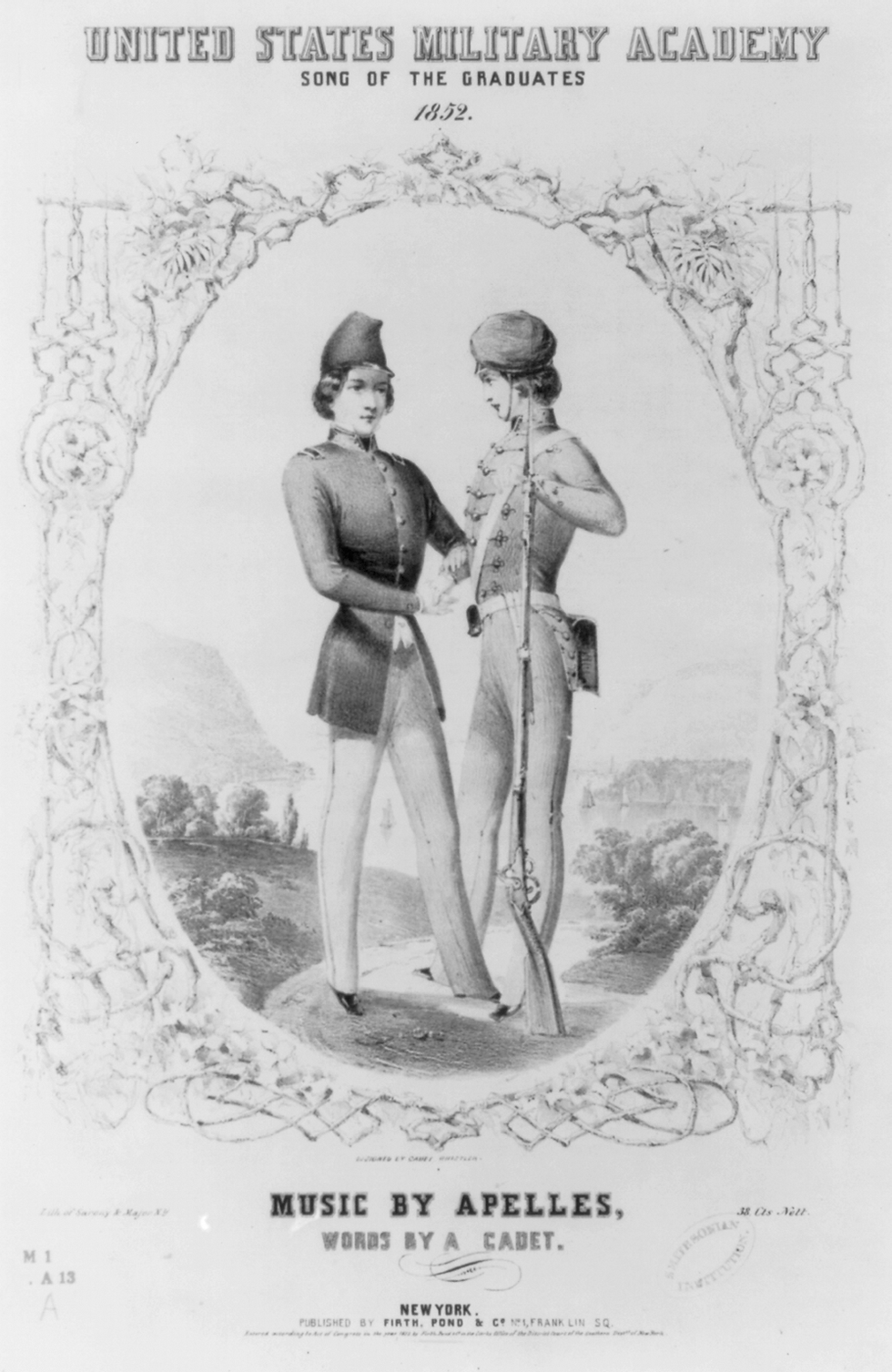
Crucially, though, Whistler’s American identity was tied closely to West Point. He was ever talking about doing things “the West Point way,” meaning properly, honourably, and forthrightly. Emphasizing this point for a journalist in 1899, he instructed him, “Tell the American people that I would not exchange my two years at West Point for all the honours that foreign countries have given me.” That same year, he agreed to being listed in the first edition of Who’s Who in America, where he proudly reminded the world that he had been educated at the academy.
Still, Whistler insisted on muddying matters. He displayed his work in either the British or American sections at international exhibitions, depending on which was most to his advantage. After his death, officials at the British Museum admitted that it was “not so easy to decide” how to categorize him. “We have hitherto put Whistler’s portraits among the Americans, his etchings among those of the British School,” officials explained in 1905. Today, the museum places his work in the “American School” but describes him as both American and British. Tate Britain’s website describes Whistler as an American working in the United Kingdom but classifies his work as “Historic and Modern British.” American institutions all claim him as an American, even though it is hard to detect anything distinctly American, British, or even French in his art.

Yet, Whistler remained ambivalent. He balked at being part of any “school” of art, whether American, British, or French. As he declared in the “Ten O’Clock” lecture, “There never was an Art-loving nation.” Similarly, in his “Red Rag” of 1879, he flatly rejected patriotism, among other emotional expressions, as a valid subject for art. I judge Whistler to have been genuinely cosmopolitan. If not rejecting America, it was never essential for his identity. After all, he told an American journalist friend, “How can a man have an attitude toward a continent?”
Images:
Images: Photo of Whistler’s Birthplace in Lowell, Massachusetts by Daniel Sutherland; Whistler with a Hat (1858) is a self-portrait at the Freer Gallery; Song of the Graduates (1852) is a woodcut by Whistler at Metropolitan Museum of Art, New York; Portrait of Whistler (1881) is a drawing by Carlo Pellegrini at Metropolitan Museum of Art, New York.
We continue to be grateful to Dan Sutherland for his Letters from America. Dan's forthcoming book will explore the enduring influence of James McNeill Whistler and the lives of those he knew and inspired.
Comments